
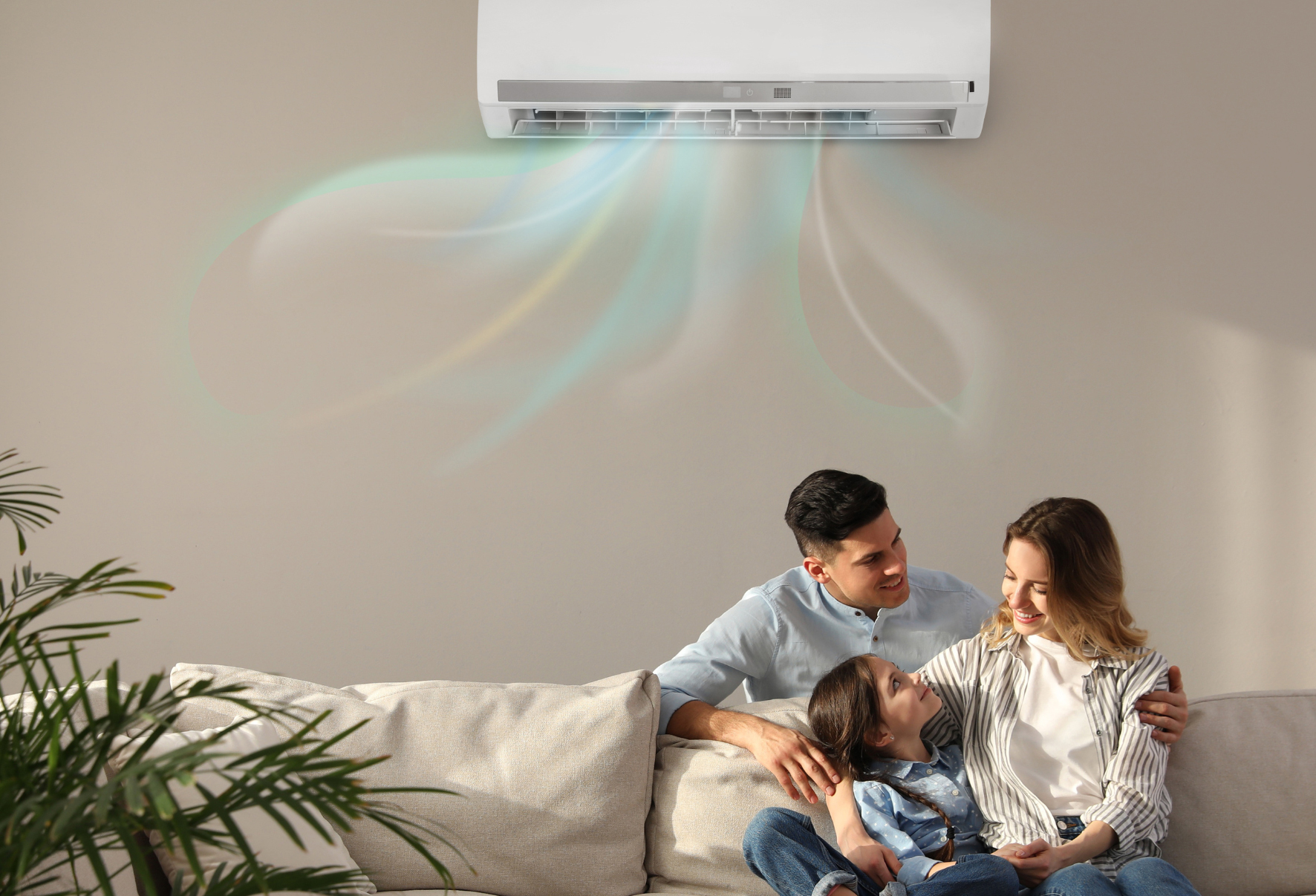
The UK is no longer planning for occasional hot spells. The Climate Change Committee warned in May 2026 that 92% of UK homes are likely to overheat by 2050, making cooling a practical home-comfort issue rather than a luxury upgrade. Smaller bedrooms and loft rooms are especially vulnerable, particularly to night-time heat builds up.
For homeowners considering multi-room air conditioning in South London, the decision is often “which rooms need control, where can the equipment sit, and how can the installation be kept neat, efficient, and serviceable?”
Our REFCOM F-Gas certified engineers design, install, service, and repair air conditioning systems. For practical advice, call 0203 620 5800.
What is a multi-split air conditioning system?
A multi-split air conditioning system uses one outdoor condenser connected by refrigerant pipework and cabling to several indoor units.
The benefit is zoning: each room gets its own control.
That matters because the warmest room is rarely the whole house. It may be the south-facing loft bedroom, garden office, or rear extension. Compared with several single-split systems, a multi-split reduces external equipment, which helps where gardens, balconies, side returns, and façades are tight.
“A good multi-room system is designed around the rooms that actually overheat, not around a generic floor plan. A survey confirms heat gain, unit locations, and pipe routes.”
Why are South London homes choosing multi-room air conditioning?
The demand for domestic air conditioning in South London is being driven by warm bedrooms, hybrid working, loft conversions, glazed extensions, and homes designed to hold heat in winter.
We see homes where one room is the problem at 2pm and another becomes the problem at 11pm. A fixed multi-split system lets you prioritise those zones, rather than relying on portable units or fans that move warm air around.
Many modern units can also provide heating. That does not automatically replace a full heating system, but it can help with rooms used intermittently. If you are reviewing wider home comfort, our air source heat pump installation guidance can help you compare different low-energy technologies.
What does the air conditioning installation process involve?
A good air conditioning installation starts with a site survey, not a product choice. The survey confirms heat gain, unit locations, and pipe routes.
The normal process is:
- Room assessment, including size, glazing, insulation, room use, and heat gain.
- System design, covering capacity, positions, pipe routes, drainage, and electrics.
- Outdoor unit placement, with attention to airflow, access, vibration, and visual impact.
- Installation of brackets, units, pipework, wiring, drainage, and outdoor equipment.
- Pressure testing, vacuuming, commissioning, user handover, and maintenance advice.
An undersized system may run too hard and still leave rooms uncomfortable. An oversized system may cycle poorly. Poor pipe routes can create avoidable boxing-in or make servicing harder. This is why qualified installation is essential.
Where should AC units go?
Indoor units need clear airflow and should not blow directly over beds, sofas, desks, or dining seats.
In bedrooms, airflow direction and quiet operation matter more than raw cooling power.
Outdoor units need clear ventilation and safe access for maintenance. In South London terraces and flats, that may mean a rear wall, side return, balcony, flat roof position, or garden location.
The best option depends on property type, access, neighbour impact, and the cleanest pipe route.
For homes already being upgraded, cooling should be planned alongside heating layout, controls, and insulation. Our central heating system specialists regularly look at whole-home comfort, because a room that overheats in summer may also have poor heat distribution in winter.
What to check before a multi-split system installation
Before committing to a multi-split system installation, check the practical details that affect performance and finish:
- Which rooms genuinely need cooling or heating?
- Will each room need independent temperature control?
- Is there a discreet, accessible outdoor unit position?
- Can pipework be routed cleanly?
- Where will condensate drain safely?
- Is the electrical supply suitable?
- How will the system be serviced?
Controls also matter. A multi-room system should be easy to use, especially where different people use different rooms at different times. If you are improving room-by-room control, smart heating controls may be worth considering as part of a wider comfort plan.
Maintaining a multi-room air conditioning system
Air conditioning servicing keeps the system efficient, clean, and reliable. Filters need routine cleaning, indoor units need inspection, drains need checking, and refrigerant systems should be assessed by qualified engineers where required.
Maintenance is not only about preventing breakdowns. It protects airflow, supports energy efficiency, and helps identify small problems before they become expensive. In multi-room homes, servicing should confirm that each indoor unit performs properly, not just the easiest room to access.
If your home is being renovated, cooling can be planned around other comfort upgrades. A loft conversion, extension, or ground-floor renovation may also be the right moment to consider underfloor heating installation where it suits the space.
Is a multi-room air conditioning right for your home?
Multi-room air conditioning is worth considering if two or more rooms regularly become uncomfortable, if you work from home, if you have a loft or garden room, or if you want cleaner zoning than portable units.
It may not be the best answer if only one small room overheats occasionally, if there is no workable outdoor unit position, or if passive measures such as shading, ventilation, and insulation have not been considered. Sometimes a single split is enough, sometimes a multi-split is the neater long-term choice.
A practical next step
The best multi-room systems feel simple. You notice the comfort, not the equipment. That comes from careful survey work, correct sizing, tidy pipe routes, good controls, and engineers who understand South London homes.
For advice, call 0203 620 5800 or email hello@southlondonheating.co.uk. We will help you decide whether a single-room, multi-room, or wider home comfort solution is the right fit.
Frequently asked questions
How does multi-room air conditioning work?
One outdoor unit connects to several indoor units. Each indoor unit serves a separate room or zone, giving independent temperature control.
Is a multi-split system better than separate single splits?
It can be better when you want to control several rooms while reducing the number of outdoor units. Separate single splits may still suit homes where rooms are far apart.
Can multi-split air conditioning heat rooms as well?
Many modern systems can provide heating as well as cooling. They are often useful for offices, bedrooms, and garden rooms.
How disruptive is multi-room air conditioning installation?
Disruption depends on pipe routes, unit locations, wall construction, and access. A good survey should explain holes, brackets, boxing-in, and drainage routes before work starts.
How often should it be serviced?
Most domestic systems benefit from regular servicing to clean filters, check drains, inspect performance, and keep the system running efficiently.
Speak With Our Friendly, Expert Team
Need advice on installing a new boiler, improving your home’s heating and hot water, or upgrading to greener heating solutions?